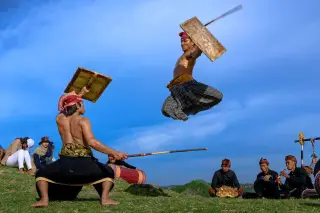

Bali temple visits: etiquette beyond sarongs and sashes
Balinese Hindu temples are active places of worship, not museums.
By Mukmin John
Editor: Mursyid Sonsang
· Event date: · 5 min read Updated

Bali — Visitors entering Hindu temples in Bali are asked to treat clothing as the starting point, not the complete etiquette guide, with most temples expecting covered shoulders and knees, a sarong around the waist and a sash on top while observing site-specific rules and restrictions.
Bali’s temples are active places of worship rather than museums, and most guides note that visitors are generally welcomed when they follow local customs and instructions from temple staff or licensed guides.
A practical preparation list drawn from multiple visitor guides is:
- Cover shoulders and knees with modest clothing.
- Wear a sarong tied around the waist.
- Add a sash (selendang) over the sarong at the waist.
- Check whether the temple provides or rents sarongs and sashes at the entrance, as many major temples do but not all.
- Ask which areas are open to visitors and which are reserved for worshippers.
Several guides emphasize that rental sarongs and sashes are commonly available at larger temples, sometimes included in the ticket price, but visitors are advised not to rely on this and to bring their own when possible.
Clothing is only the first step
The sash, or selendang, is worn firmly around the waist over the sarong. Visitors unfamiliar with the arrangement are advised to ask temple staff or a guide for help, with the aim of showing respect in an active religious setting rather than simply meeting a tourist dress code.
Etiquette also covers movement within temple grounds. Daily offerings made from palm leaves, flowers and other items, known as canang sari, are frequently placed on steps, paths and at doorways. Guides consistently advise visitors not to step on offerings and to walk around them instead, as disturbing them is considered disrespectful.
During ceremonies, visitors are asked to stand to the side, keep noise low and avoid blocking worshippers or processions. Several guides recommend not positioning oneself above people who are praying, not walking between a priest and an altar and avoiding flash photography during rituals.
Photography rules depend on what is being photographed. Architecture and general views in outer courtyards are usually acceptable, but guides urge visitors to ask permission before photographing priests or families at prayer and to respect any refusal. Photography in inner courtyards, or jeroan, is often restricted or banned during active prayer, and dedicated photography guides note that many inner sanctums do not allow photography at all.
Rules can differ by temple
While general clothing and conduct expectations are similar across Bali, several guides highlight examples of temple-specific practices.
At Tirta Empul near Ubud, visitors may join the melukat purification ritual by bathing under spring-fed spouts, following the order of the queue and treating the pools as sacred space. Guides advise using a dedicated bathing sarong provided or carried for the water, and not wearing that sarong again on land after the ritual.
At Tanah Lot, multiple visitor guides state that non-Hindus cannot enter the main temple on the offshore rock, with access limited to outer areas, viewpoints and surrounding shrines. Some guides add that while a sarong is expected if receiving a blessing at the spring, the standard sarong-and-sash requirement at the inner shrine does not apply to tourists because the shrine itself is closed to them.
Uluwatu Temple is widely known for its resident monkeys. Visitor guides warn that the monkeys may grab sunglasses, hats and phones, and they recommend storing loose items securely in bags before entering the cliff-top area.
Several temple guides and etiquette overviews also mention a customary restriction on menstruating women entering inner courtyards, while outer areas may remain accessible. These sources present the practice as widely respected in Balinese Hindu tradition, but note that signs and enforcement can vary between temples and ceremonies, so visitors are advised to follow the instructions posted or given at each site.
Across these examples, the central principle is that temple visits involve active religious spaces whose rules can vary by location and circumstance. Guides therefore recommend confirming current entry policies, ceremony protocols, photography rules and access to inner courtyards with temple staff or an official guide at the entrance.
Context
Because temples in Bali are used daily for offerings, prayer and ceremonies, visitor etiquette extends beyond clothing. Common guidance across multiple independent sources is to cover shoulders and knees, wear a sarong and sash at the waist, avoid stepping on offerings, respect ceremonies, seek consent before photographing worshippers and observe restrictions around inner sanctums reserved for worshippers.
There is no single, island-wide entry policy documented across all temples, and visitor guides instead describe shared customs alongside examples from Tirta Empul, Tanah Lot, Uluwatu and other sites. For international visitors, this means that modest dress is a reliable baseline, while detailed rules regarding immersion rituals, inner courtyard access and photography are best confirmed at each temple on the day of the visit.
Sources
- VisitBali.com – Bali Temple Etiquette: A Respectful Visitor Guide
- Totally Bali – Bali etiquette and temple rules for visitors
- Angga’s Hidden Bali – Bali Temple Etiquette: What Guides Wish Every Visitor Knew
- Outbound Lynx – Bali Customs and Etiquette: Temples, Tips and Greetings
- Medium – Bali Temple Etiquette: How to Visit Respectfully
- Bali Frontier – Bali Temples Guide & Etiquette
- TravJoy – Bali Temples: 15 Sacred Sites Worth Visiting in 2026
- SB Excursion – Tanah Lot: No Temple Entry, IDR 75,000, Sunset 18:05-18:50
Read next
More on this story
Tourism & Hospitality
Bali airport transfers to Seminyak: options, prices and journey times
Bali airport transfers to Seminyak are road journeys with several choices, but traffic can turn a short trip into an hour or more. Here are the transp…
Most read in Explainers & Data

Today’s top story

Related