
Infrastructure, food checks and shuttles support 2026 IBTK at Besakih
Bali authorities and temple managers combined food-safety checks, structured shuttle services, environmental rules and a temporary closure of Mount Agung to support the 2026 Ida Bhatara Turun Kabeh observance at Pura Agung Besakih.
By Mukmin John
Editor: Mursyid Sonsang
· Event date: · 4 min read
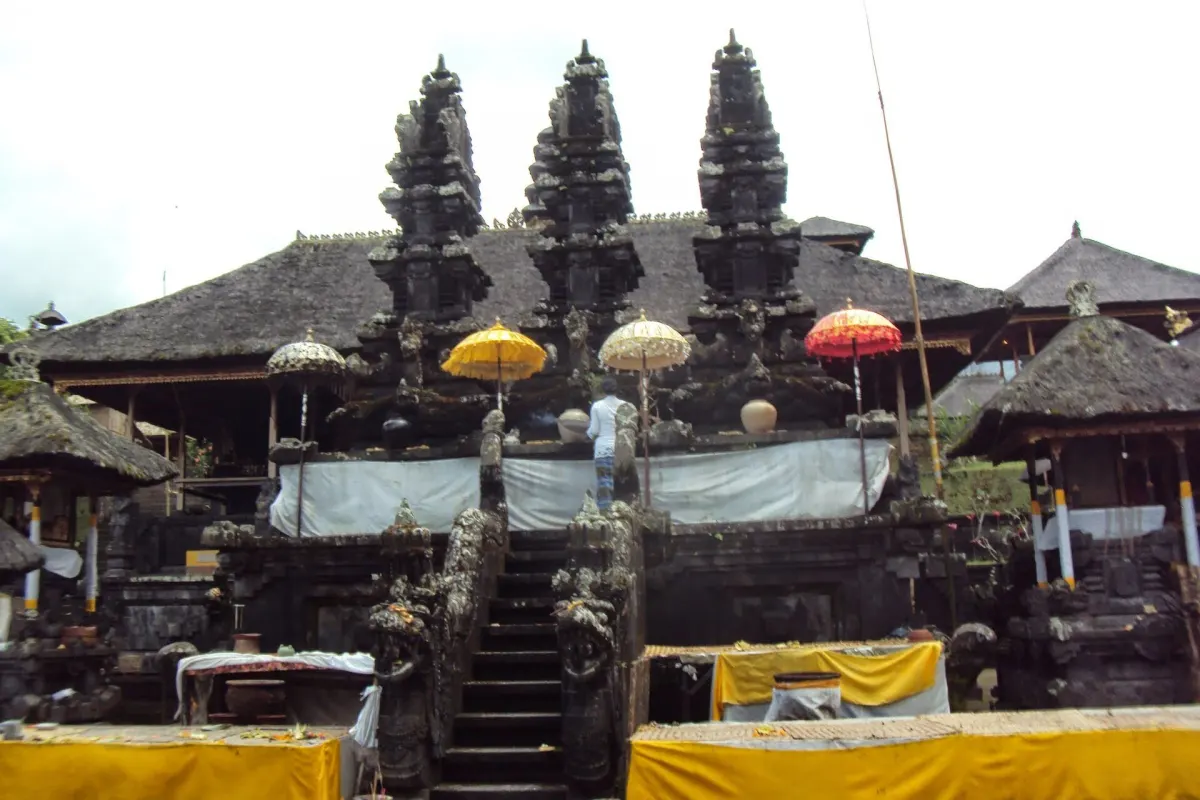
Denpasar — Authorities in Bali have stepped up infrastructure and public health measures around Pura Agung Besakih in Karangasem for the 2026 Ida Bhatara Turun Kabeh (IBTK) observance, combining road and lighting work, food-safety checks and controlled shuttle services for worshippers.
According to the official schedule issued by the IBTK committee and reported by local media, the peak of the Karya Ida Bhatara Turun Kabeh at Besakih was held on Thursday, 2 April 2026, coinciding with the full moon of Kedasa, with the series of rituals continuing until the closing ceremony on 23 April 2026.
Regional broadcasters and newspapers describe IBTK as a major annual Hindu ceremony that draws worshippers from across Bali and other provinces, with the Besakih traditional village and temple authorities coordinating with the provincial and regency governments on preparations.
Food safety checks at Besakih culinary area
The Besakih Sacred Area Management Agency worked with the Balai Besar Pengawas Obat dan Makanan (BBPOM) Denpasar, the Karangasem Health Office, UPTD Puskesmas Rendang and Poltekkes Kemenkes Denpasar to conduct education sessions, surprise inspections and food sampling among fast-food vendors in the temple area during the first days of the 2026 programme, according to a report published in early April 2026.
The inspection focused on identifying hazardous substances in food sold to worshippers, including common illegal additives such as borax, synthetic dyes and formalin, and was accompanied by hygiene guidance for traders.
BBPOM officials stated that the samples tested from the Besakih culinary area did not contain dangerous chemicals and were declared fit for consumption, while vendors were reminded to maintain cleanliness, use proper protective clothing and manage food handling to avoid spoilage.
Shuttle buses and movement controls
To manage movement on the steep internal routes at Besakih, the Besakih Sacred Area Management Agency prepared a dedicated shuttle-bus system for IBTK 2026.
According to statements from the head of the agency reported by Bali-based media in late March 2026, a total of 20 shuttle buses were deployed during the ceremony period: 10 non-electric shuttles operating between the Kedungdung parking area and Manik Mas, and 10 electric shuttle vehicles serving the Manik Mas–Padma Buana corridor.
The electric shuttles were reserved for specific groups, including children, pregnant women, elderly worshippers, people with disabilities and Hindu priests, while other worshippers were expected to walk part of the route or use the non-electric shuttles from the main parking area.
Environmental measures and Gunung Agung closure
Organisers also linked the 2026 Besakih observance to environmental and safety measures.
Provincial and temple authorities emphasised a ban on single-use plastic during IBTK 2026 and encouraged worshippers to limit waste and take offerings remains back with them after praying, as reported by regional broadcasters and online outlets.
Separately, local lifestyle media reported that hiking access to Mount Agung, which towers above the Besakih complex, was temporarily closed for 28 days from 28 March to 24 April 2026 to respect the sacred observance and maintain safety in the area, with the trail scheduled to reopen on 25 April 2026 after the closing rites.
Context
Besakih, often described as Bali’s most important temple complex, serves as a central site for large-scale Hindu ceremonies, including IBTK.
For the 2026 programme, authorities and temple managers prioritised safer access, structured transport, clean food vending and reduced plastic waste to support worshippers while maintaining the sanctity of the site.
Sources
- RRI Singaraja – Karya Ida Bhatara Turun Kabeh 2026
- Tribun Bali – Jadwal Lengkap Karya Ida Bhatara Turun Kabeh Pura Agung Besakih 2026
- Provincial Government of Bali – Hari Pertama IBTK 2026 di Besakih Lancar, Pengelola Antisipasi Kebersihan
- Literasi Post – Badan Pengelola FKSPA Besakih Bersama BBPOM Uji Kuliner di Area IBTK 2026
- Detik Bali – 20 Shuttle Bus Disiapkan saat Karya IBTK Besakih, Gratis untuk Lansia dan Ibu Hamil
- CNN Indonesia – Pendakian Gunung Agung Ditutup hingga Akhir April Saat Upacara Besakih
- Orti Bali – Kapan Mulai IBTK 2026? Cek Jadwal Lengkapnya di Sini
Next story
Bali Police map Nyepi and takbiran security at 308 sites in March 2026
Bali Police are mounting Operation Ketupat Agung 2026 to secure Nyepi and Idul Fitri, with coordinated traffic control around Hindu rituals and tightl…
Related