
Three principles behind Indonesia’s sustainable tourism villages
IndonesiaWise CEO Amol Titus says tourism villages can spread visitor income beyond cities while protecting nature, community livelihoods and cultural heritage.
Editor: Mursyid Sonsang
· Event date: · 4 min read
Jakarta — — Tourism villages can offer a community-led alternative to city‑centred development by linking visitor spending with environmental protection and cultural preservation, IndonesiaWise CEO Amol Titus said in an interview reported by RRI on Friday, 4 September 2026.
Titus identified three core elements in sustainable tourism villages: environmental protection, community participation and cultural preservation, according to the Voice of Indonesia service of RRI.
He argued that tourism benefits should not be concentrated only in major urban destinations if Indonesia wants economic gains to reach rural communities, and said that when villages prosper and progress, the wider country also progresses.
RRI’s tourism report highlighted four villages as examples of this approach: Penglipuran and Jatiluwih in Bali, and Wukirsari and Nglanggeran in the Special Region of Yogyakarta.
The villages mentioned by RRI are among those recognised under UN Tourism’s Best Tourism Villages initiative. Jatiluwih and Wukirsari were named Best Tourism Villages 2024, while Penglipuran and Nglanggeran received the award in earlier editions, according to Indonesia’s tourism village portal and national media reports.
What the cited villages demonstrate
At Penglipuran, visitors can experience traditional Balinese architecture and village planning, RRI reported. The village’s streetscape and compounds are presented not only as a visual attraction but as an example of how a community’s built environment can remain central to the visitor experience.
Jatiluwih demonstrates the environmental and cultural dimensions of the tourism village model through its Subak rice terraces and traditional water‑management system. The case shows how tourism can be integrated with an existing agricultural landscape rather than separated from the systems that support local livelihoods.
Wukirsari and Nglanggeran illustrate different forms of cultural and economic participation. According to RRI, Wukirsari has helped preserve local batik traditions, while Nglanggeran has developed locally sourced products such as cacao and coffee through community cooperatives.
Taken together, the examples suggest that a tourism village does not need to rely on a single type of attraction. Architecture, farming, water management, crafts and locally processed products can all form part of a community’s tourism economy when residents remain closely involved in designing and managing activities.
Lessons for Bali’s village projects
For newer village projects in Bali, the central lesson from the RRI report is that sustainability should be built into the tourism offer rather than added later as a marketing claim.
The three elements highlighted by Titus translate into practical questions for destination planners and communities: which aspects of the local environment are being protected as tourism grows, how residents participate in and benefit from tourism, and which cultural practices remain under community control.
The report also frames visitor behaviour as part of the model. Travelers can observe farming, food preparation, fishing and traditional crafts in the communities where those activities originate, rather than encountering culture only through conventional sightseeing products.
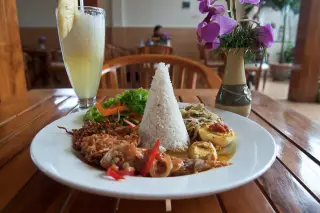
Beyond Bali and Yogyakarta, RRI cited the Lake Toba region in North Sumatra, where visitors can see the preparation of ikan arsik, a traditional Batak fish dish, as an example of how food can connect tourists with local knowledge and household or community activity.
Titus said that purchasing local handicrafts, food and other products can channel tourism revenue more directly to village communities. In his view, such spending can support livelihoods while giving residents an economic incentive to continue protecting cultural and environmental assets.
Context
RRI published its tourism villages explainer on 4 September 2026, following a Voice of Indonesia talk show with Amol Titus held in Jakarta on 1 September 2026.
The broadcaster framed tourism villages as part of a broader effort to distribute tourism benefits beyond major cities and support inclusive economic growth, linking this to villages that have received international recognition from UN Tourism.
In the report, Penglipuran and Jatiluwih were used to illustrate traditional Balinese architecture, village layout, rice terraces and Subak water management, while Wukirsari and Nglanggeran were highlighted for their role in preserving batik and developing community‑based cacao and coffee products.
The broader argument is that well‑managed village tourism can combine authentic visitor experiences with local livelihoods and long‑term conservation, provided that communities remain at the centre of decision‑making and benefit directly from tourism‑related spending.
Sources
Next story
Sudaji Peace Trail Fun Run draws 144 runners in Buleleng
The inaugural six-kilometre run in Sudaji village combined sport, rural tourism and environmental activities, drawing 144 runners and spotlighting Bal…
Related