
Rote Ndao’s 2,000-Hectare Salt Centre Anchors Indonesia’s 2029 Import Exit
Indonesia is building the K-SIGN salt industry centre in Rote Ndao, East Nusa Tenggara, as a key plank in its plan to halt salt imports by 2029.
Editor: Mursyid Sonsang
· Event date: · 5 min read
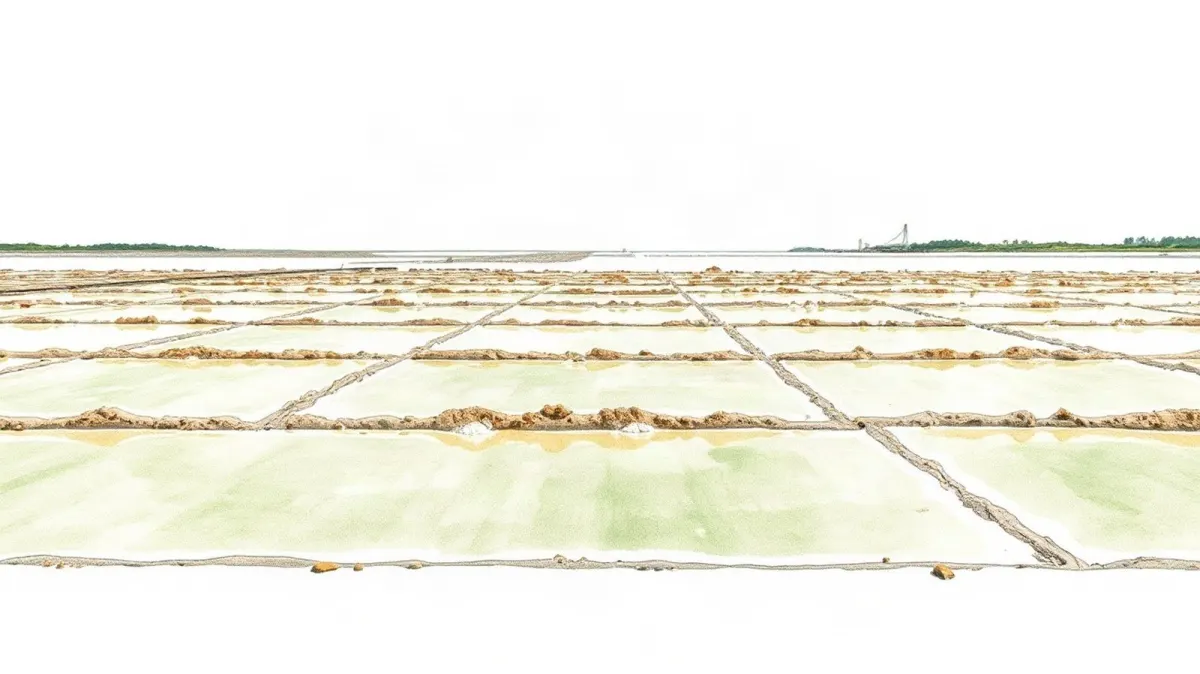
Jakarta — Indonesia is developing a 2,000-hectare national salt industry centre in Rote Ndao, East Nusa Tenggara, as part of a plan to end salt imports by 2029, with the first 616 hectares already completed and entering production trials ahead of a targeted first harvest in November 2026, according to government communications chief Muhammad Qodari and several media reports.
The project is known as the Kawasan Sentra Industri Garam Nasional (K-SIGN), or National Salt Industry Centre. Qodari said on Wednesday, 2 September 2026, that the government aims to raise national salt output from a baseline of around one million tons to 2.5 million tons in 2026, 3.5 million tons in 2027 and five million tons in 2029 to support self-sufficiency.
In parallel, the volume of salt imports is targeted to fall from about 2.6 million tons to two million tons in 2026 and one million tons in 2027, with the stated goal of reaching zero imports in 2029.
How the Rote Ndao development is structured
According to Qodari and officials cited by several outlets, the Rote Ndao salt development covers a wider priority area of around 10,764 hectares. Within this, the Ministry of Marine Affairs and Fisheries (Kementerian Kelautan dan Perikanan, KKP) plans to develop about 2,000 hectares as the core K-SIGN site, while more than 8,000 hectares are to be opened to investors under various cooperation schemes, including revenue-sharing arrangements.
Media reports quoting Qodari state that KKP has completed the first phase of 616 hectares and is now working on a second phase covering 751 hectares. The planned infrastructure includes open salt ponds, access roads, storage and processing facilities, pumps and other supporting systems to increase both output and quality.
Qodari and regional media estimate investment for the 2,000-hectare K-SIGN development at around Rp2 trillion, covering the construction and operation of the salt ponds and associated facilities. The reports do not yet specify the full list of investors or provide a detailed financing breakdown.
KKP’s development model uses land owned by local residents for part of the 2,000-hectare area, structured as cooperation on land use rather than full acquisition, according to coverage of Qodari’s briefing. The remaining area is intended for investor participation, which officials say is expected to create jobs and related businesses such as transport and trading.
Key figures
- Planned K-SIGN core development: 2,000 hectares.
- Wider priority salt area in Rote Ndao: approximately 10,764 hectares.
- Completed first phase: 616 hectares.
- Second phase under development: 751 hectares.
- Estimated investment for K-SIGN: about Rp2 trillion.
- First harvest target: November 2026.
Technology, quality and farmer participation
Reports on the project state that the initial production model uses open salt ponds lined with high-density polyethylene (HDPE) geomembranes, a technology promoted by KKP to improve both the volume and quality of salt produced. Officials have also signalled that the site may integrate renewable energy, including solar power, as facilities are developed, but have not yet detailed specific capacities or environmental targets.
According to government communications cited by national and regional media, K-SIGN is intended as a national pilot that applies modern salt-production technology, integrates supply chains and broadens farmers’ access to financing. The broader 10,000-hectare-plus area is projected to have the potential to produce around two million tons of salt once fully developed, significantly contributing to the 2029 self-sufficiency target.
Officials and media reports say the project is expected to create tens of thousands of jobs, both directly in salt production and indirectly in supporting activities such as trading and services, although detailed breakdowns by community group or gender have not yet been published.
Marine Affairs and Fisheries Minister Sakti Wahyu Trenggono launched the Rote Ndao K-SIGN project in June 2025 as part of a wider strategy to replace imported salt with domestic output, according to national media coverage of the ministry’s programme.
Context: Indonesia’s 2029 salt target
The government’s timetable for salt self-sufficiency assumes rapid growth in national production over three years, supported in part by K-SIGN Rote Ndao and other salt centres. Baseline production of around one million tons is targeted to rise to 2.5 million tons in 2026, 3.5 million tons in 2027 and five million tons in 2029.
At the same time, the import volume is projected to fall from about 2.6 million tons to two million tons in 2026 and one million tons in 2027, with officials repeating the goal of zero salt imports in 2029 in multiple briefings and interviews.
Rote Ndao is one of several locations in this strategy; officials have also mentioned other salt centres, including in East Java, though detailed plans comparable to the Rote Ndao project have not yet been widely reported.
Sources
- RRI.co.id - Pemerintah Targetkan Hentikan Impor Garam pada 2029
- IDN Times - Ingin Swasembada, Pemerintah Target Setop Impor Garam pada 2029
- tvOneNews - Proyek Industri Garam Raksasa di Rote Ndao, Pemerintah Bidik Produksi 5 Juta Ton di 2029
- Detik.com - RI Bangun Sentra Industri Garam Nasional di NTT, Targetkan Setop Impor 2029
- CNN Indonesia - Pemerintah Target Setop Total Impor Garam di 2029
- Industry.co.id - Kucurkan Rp2 Triliun di Rote Ndao, Pemerintah Kejar Swasembada Garam 2029
- Pos-Kupang (Tribunnews Network) - Pangkas Paradoks Impor Garam, Pemerintah Kucurkan Rp 2 Triliun Bangun Industri Garam Rote Ndao
- Feedberry - Setop Impor Garam 2029 — KSIGN NTT Jadi Andalan Swasembada
- Inilah.com
Read next
More on this story

Business & Investment
Bali Governor Koster Sets Four-Part Investment Approach
Bali Governor Wayan Koster outlined four measures to expand MSME financing and attract investment into agriculture, energy, culture, digital industrie…
Most read in East Indonesia Desk
Today’s top story
Related