

Survey finds 54 bird species in Jempanang, northern Badung
A 2021 field survey in Jempanang, northern Badung, documented 54 bird species and 18 tree species across riparian, plantation and forest-edge habitats, providing a baseline for biodiversity and watershed planning but not a full picture of…
By Pandi Muktar
Editor: Mursyid Sonsang
· Event date: · 4 min read Updated
Badung — A field survey in Jempanang, in the northern part of Badung Regency, recorded 54 bird species and 18 tree species across riparian, plantation and forest-edge habitats in June 2021, according to a study published in the journal Biodiversitas in 2022.
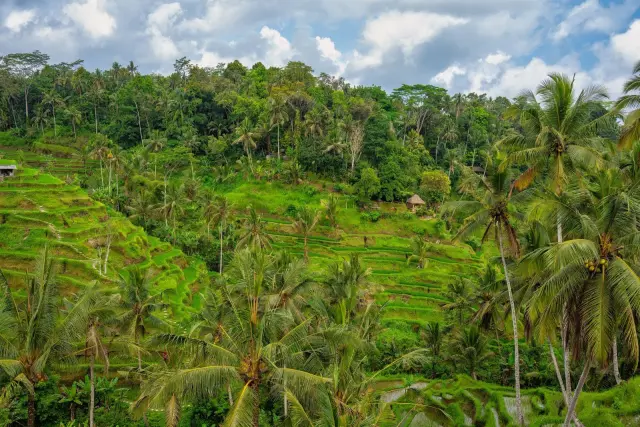
Jempanang is described in the paper as a sub-village of Bilok Sidan Village in Badung’s mountainous north, where forest and plantation land are the dominant land-cover types. The survey sites lie in the upper part of the Ayung River basin, a major watershed that extends across Bangli, Badung, Gianyar and Denpasar.
The research team from Universitas Udayana and PT Tirta Investama assessed birds using a point-count method and analysed tree diversity through vegetation sampling. The study explicitly relates bird diversity to patterns of tree diversity and landscape heterogeneity, rather than treating bird numbers as a stand-alone indicator of habitat quality.
Riparian habitat showed highest bird diversity
The paper reports that overall bird diversity in Jempanang was high, based on a Shannon–Wiener diversity index value of 3.27 for birds. Among the three habitat types, bird diversity was highest in the riparian area, while plantation and forest-edge sites showed moderate bird diversity.
Tree diversity at the plantation site was the lowest in terms of absolute species numbers, but diversity index values at all three sites fell within the range classified as moderate tree diversity in the study. The authors note that the wide range of land uses in Jempanang supports a diverse composition of plant species, increasing the number of environmental niches and contributing to higher bird diversity.
The survey recorded a total of 54 bird species belonging to 45 genera, 29 families and 10 orders, and 18 tree species across the three sites. The paper highlights the presence of raptor species and suggests that their occurrence can be an indicator of relatively good environmental quality in the area.
Assessment at a glance:
- Survey period: June 2021
- Bird species recorded: 54
- Tree species recorded: 18
- Habitats assessed: Riparian, plantation and forest edge
- Bird-diversity ranking: Highest in riparian habitat
The authors frame Jempanang’s varied land uses as creating different environmental niches, with trees providing food, shelter and nesting sites for birds, while birds in turn contribute to seed dispersal, pollination and pest control. They argue that maintaining heterogeneity in the landscape can help sustain bird and tree diversity.
The study states that northern Badung has a role as a water-catchment zone under the regency’s spatial planning framework, and calls for regular biodiversity monitoring to support environmental planning and site-level management.
As part of its recommendations, the paper suggests that birdwatching activities could underpin community-based conservation and create local incentives to preserve biodiversity, presenting this as a potential approach rather than an existing programme.
Baseline survey with limited temporal coverage
The article in Biodiversitas, Volume 23, Number 9, pages 4482–4489, notes that this is the first published assessment of bird and tree diversity in Jempanang. The manuscript was received on 5 May 2022 and accepted on 28 August 2022 before publication later that year.
The authors emphasise that the findings represent a snapshot of three habitat types during a single point-count survey in June 2021. They do not claim that the 54 bird species recorded represent all species present in Jempanang or across northern Badung, and the paper does not provide trend comparisons with earlier years.
By identifying species richness and diversity indices for birds and trees in riparian, plantation and forest edges, the study establishes a baseline that can be used for future monitoring and to inform land-use decisions in the upstream Ayung River catchment.
Sources
- Biodiversitas – Assessing the bird and tree species diversity in the north of Badung, Bali, Indonesia
- Jurnal Biologi Udayana – Citation of "Assessing the bird and tree species diversity in the north of Badung, Bali, Indonesia"
- R Discovery – Assessing the bird and tree species diversity in the north of Badung, Bali, Indonesia (article summary)
- Ridwan Institute – Discussion of Badung Regency Regional Regulation No. 26 of 2013 on spatial planning
Read next
More on this story
Tourism & Hospitality
Sudaji Peace Trail Fun Run draws 144 runners in Buleleng
The inaugural six-kilometre run in Sudaji village combined sport, rural tourism and environmental activities, drawing 144 runners and spotlighting Bal…
Latest in Environment

Today’s top story

Related