
BRIN Ties Lake Batur Mass Fish Deaths to Oxygen Crash During Lake Mixing
BRIN researchers link a late-July mass fish kill in Lake Batur to natural lake mixing that brought oxygen-poor, sulfide-bearing bottom water to the surface, but say laboratory analysis is still needed to confirm the full cause of the…
By Pandi Muktar
Editor: Mursyid Sonsang
· Event date: · 5 min read Updated
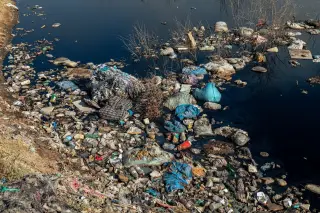
Bangli — Tens of tons of farmed Nile tilapia died suddenly in Lake Batur, Bangli Regency, in late July 2026, with researchers from Indonesia’s National Research and Innovation Agency (BRIN) linking the event to a sharp drop in dissolved oxygen during a natural lake-mixing process rather than to a single confirmed toxic agent. Laboratory analysis of water quality is still underway.
BRIN’s preliminary assessment, relayed in an early August media briefing, ties the die-off to lake mixing, a natural overturning of the water column in which oxygen-poor water from the bottom of the lake rises and combines with surface water. According to BRIN biogeochemistry researcher Sulung Nomosatryo, the deeper layer of Lake Batur normally contains less oxygen because of long-term decomposition of organic material and the accumulation of sulfide compounds.
During the late-July incident, BRIN’s field team measured dissolved oxygen at the lake surface dropping to nearly zero milligrams per liter. At the same time, they reported a strong smell of hydrogen sulfide (H₂S), indicating that water from the lake’s lower layer had reached the fish habitat.
Local authorities documented substantial losses. The Bangli Agriculture, Food Security and Fisheries Office (PKP) reported that by 25 July 2026, the mass mortality of cultured fish in floating net cages in three lakeside villages had reached 37.1 tons, with economic losses estimated at around Rp 1.1 billion. Earlier tallies from fisheries officials put confirmed deaths at about 25 tons of Nile tilapia, while noting the total could be higher.
How lake mixing can stress fish
BRIN researchers describe the late-July event as driven by seasonal overturning of the lake, a process associated with cool, windy conditions in the dry season. When deeper water rises, sulfide present in the oxygen-poor bottom layer can be transported into the zone where fish live and, under some conditions, converted into hydrogen sulfide, which is highly toxic to aquatic organisms.
The mixing process also affects oxygen availability. Once sulfide-rich water reaches more oxygenated layers, sulfides can oxidize back into sulfates, a reaction that consumes dissolved oxygen and can further depress oxygen levels already near zero. According to BRIN’s account, this combination of oxygen depletion and potential hydrogen sulfide exposure is a plausible explanation for the sudden deaths, particularly in densely stocked cages.
Lake Batur’s setting inside the caldera of Mount Batur contributes to its chemistry. The Geological Agency of the Ministry of Energy and Mineral Resources notes that natural hydrothermal activity and the presence of dissolved volcanic gases, including hydrogen sulfide, are part of the lake’s normal dynamics. Under certain conditions, especially during mixing of water masses, gas release can produce a sulfur smell and trigger sharp drops in dissolved oxygen that may cause mass fish mortality.
What BRIN says is known so far
In its early August communication, BRIN emphasized that oxygen depletion and sulfide-related processes are strongly indicated but not yet proven as the sole cause of the die-off. Sulung Nomosatryo stressed that the presence of hydrogen sulfide odor shows bottom water likely rose to the surface, but “sulfide cannot be immediately concluded as the single cause of fish mortality” and that comprehensive laboratory analysis of all water-quality parameters is needed before reaching a definitive conclusion.
According to BRIN’s Limnology and Water Resources researchers, Lake Batur typically experiences mixing periods in the mid-year dry season and again around late December to February, consistent with its characterization as a polymictic lake that mixes several times annually. Previous scientific work on fish kills in the lake has also linked mass mortality of cultured fish to upwelling-driven changes in chemistry and oxygen levels.
Implications for residents and visitors
The Geological Agency has stated that the gas release and fish deaths in Lake Batur are linked to natural limnological and hydrothermal dynamics and are not an indication of an impending volcanic eruption at Mount Batur. Authorities have advised residents to avoid close contact with areas showing active gas release, but the event has been framed as a localized lake phenomenon rather than a wider regional water-quality crisis.
As of late July, local fisheries officials and district authorities were coordinating removal of fish carcasses and monitoring lake conditions, with reports indicating that water quality near the affected cages was gradually improving by 26 July 2026. Further BRIN laboratory results and any follow-up guidance from provincial or national agencies are expected to clarify the relative roles of oxygen depletion, sulfide exposure and other stressors in the Lake Batur fish die-off.
Sources
- detik.com – BRIN Ungkap Sebab Kematian Massal Ikan di Danau Batur Bali
- BALIPOST.com – Dinas PKP Bangli Catat Kerugian akibat Letupan Belerang
- SuaraBali.id – 25 Ton Ikan Nila Mati Massal Akibat Letupan Belerang di Danau Batur
- CNBC Indonesia – Muncul Fenomena Kematian Massal, Warga Diminta Jauhi Gunung Batur
- VOI.id – Thousands of Fish Die in Bali's Batur Lake Caused by Natural Dynamics
- IOP Conference Series: Earth and Environmental Science – Study on Mass Death of Cultured Fish in Batur Lake
- IDN Times – Danau Batur Kehabisan Oksigen, Ikan Mati Massal
- Tempo
Read next
More on this story
Environment
Bali launches one-month Danau Batur restoration operation
Bali officials and the military launched a one-month Danau Batur restoration programme on 30 October, combining shoreline cleanup, weed removal, waste…
Most read in Environment
Today’s top story

Related