
DPD member urges Bali to adopt cultural-capital regulation
DPD RI member Ida Bagus Rai Dharmawijaya Mantra is calling for a Bali regional regulation on “cultural capital” to recognise community-held cultural assets and ensure residents share in tourism income without having to convert agricultural…
Editor: Mursyid Sonsang
· Event date: · 4 min read Updated
Denpasar — DPD RI member Ida Bagus Rai Dharmawijaya Mantra has urged Bali’s provincial and local governments to adopt a regional regulation on “cultural capital” to protect community cultural assets and ensure residents share more fairly in tourism income without having to convert agricultural land.
Speaking during a Komite III performance report for the 2024–2025 working period, Rai Mantra said such a regulation is needed so that assets developed and maintained by local communities across generations can be preserved and become an economic foundation for those communities, according to local media coverage of the event.
He described cultural capital as including values, norms and knowledge and linked it to his committee’s focus areas of religion, education, health, culture, creative industries, employment and social welfare.
Call for a regional regulation
Rai Mantra’s proposal is framed as a call for a provincial regulation (Perda) that would recognise community-held cultural assets and set out how benefits from those assets should flow back to local residents.
According to his presentation, the regulation would be intended to protect cultural assets inherited across generations, keep them from being eroded by commercial pressures and position them as an economic base for communities.
He argued that communities maintaining cultural assets should be able to obtain economic returns without being required to change the use of their land, particularly agricultural land.
As of late September 2026, there is no public indication in available reports that the Bali provincial government has drafted, tabled or enacted a specific Perda on cultural capital in response to this call. The proposal remains an advocacy position advanced in his capacity as a DPD RI representative for Bali.
Jatiluwih cited as a key example
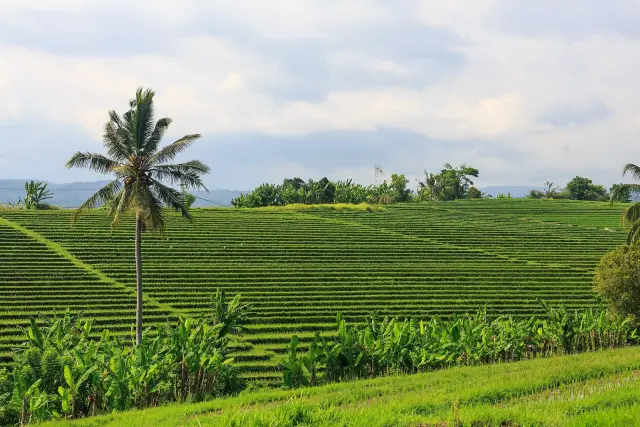
To illustrate the issue, Rai Mantra cited the Jatiluwih rice terraces in Tabanan, which he noted have UNESCO World Cultural Heritage status.
Jatiluwih forms part of the “Cultural Landscape of Bali Province: the Subak System as a Manifestation of the Tri Hita Karana Philosophy”, a UNESCO World Heritage listing inscribed in 2012 that recognises Bali’s traditional subak irrigation system and associated cultural landscape.
The terraces at Jatiluwih are maintained through the subak water-management collectives that integrate rice farming, irrigation, temples and community organisation grounded in Balinese Hindu philosophy.
Rai Mantra highlighted Jatiluwih as an example of agricultural landscapes that generate tourism value while depending on farmers’ knowledge and long-standing practices. He argued that farmers and local residents should not be excluded from tourism income or forced to convert rice fields into commercial facilities in order to benefit.
His comments point to a regulatory framework in which community agricultural knowledge and cultural practices would be treated as assets whose economic returns should be shared with their custodians, while maintaining the agricultural function of the land.
Unresolved policy details
While Rai Mantra has called for Bali to have a Perda on cultural capital, public reports of his presentation do not set out draft legal text, a proposed title or detailed mechanisms for how such a regulation would establish ownership, distribute income or designate implementing agencies.
The advocacy, as described, focuses on principles: recognition of community cultural assets; protection of those assets and related intellectual property; and ensuring that benefits from tourism and other economic activities flow to the communities that created and maintain them.
He delivered these proposals in the broader context of Komite III’s work on strengthening religion, education, tourism and culture, including separate initiatives related to Widyalaya education and professional training for Hindu religion teachers.
For now, the cultural-capital regulation remains a recommendation from a DPD member aimed at Bali’s regional governments rather than a confirmed item on the legislative agenda.
Sources
- Baliekbis.com – "Rai Mantra Paparkan Kinerja Komite III DPD RI 2024–2025"
- DPD RI Bali – provincial representative news page
- Jatiluwih official site – "The UNESCO Heritage"
- Wikipedia – "Subak (irrigation)"
- National Institute for Environmental Studies (Japan) – "Rice terrace designated as a UNESCO World Cultural Heritage Site"
Read next
More on this story
Tourism & Hospitality
Tabanan Plans Route Linking Subak Museum With Jatiluwih and Tanah Lot
Tabanan officials are preparing a concept linking Museum Subak Sanggulan with Jatiluwih and Pakendungan–Tanah Lot. Construction has been affected by a…
Most read in Business & Investment

Today’s top story

Related