

Nusa Penida OGOD fee system raises Rp2.7 billion in nine days
Nusa Penida’s OGOD levy system raised about Rp2.7 billion in attraction fees from 1–9 September 2026, while early implementation brought queues, technical glitches and a clampdown on unlicensed fee collection at Diamond Beach.
Editor: Mursyid Sonsang
· Event date: · 5 min read
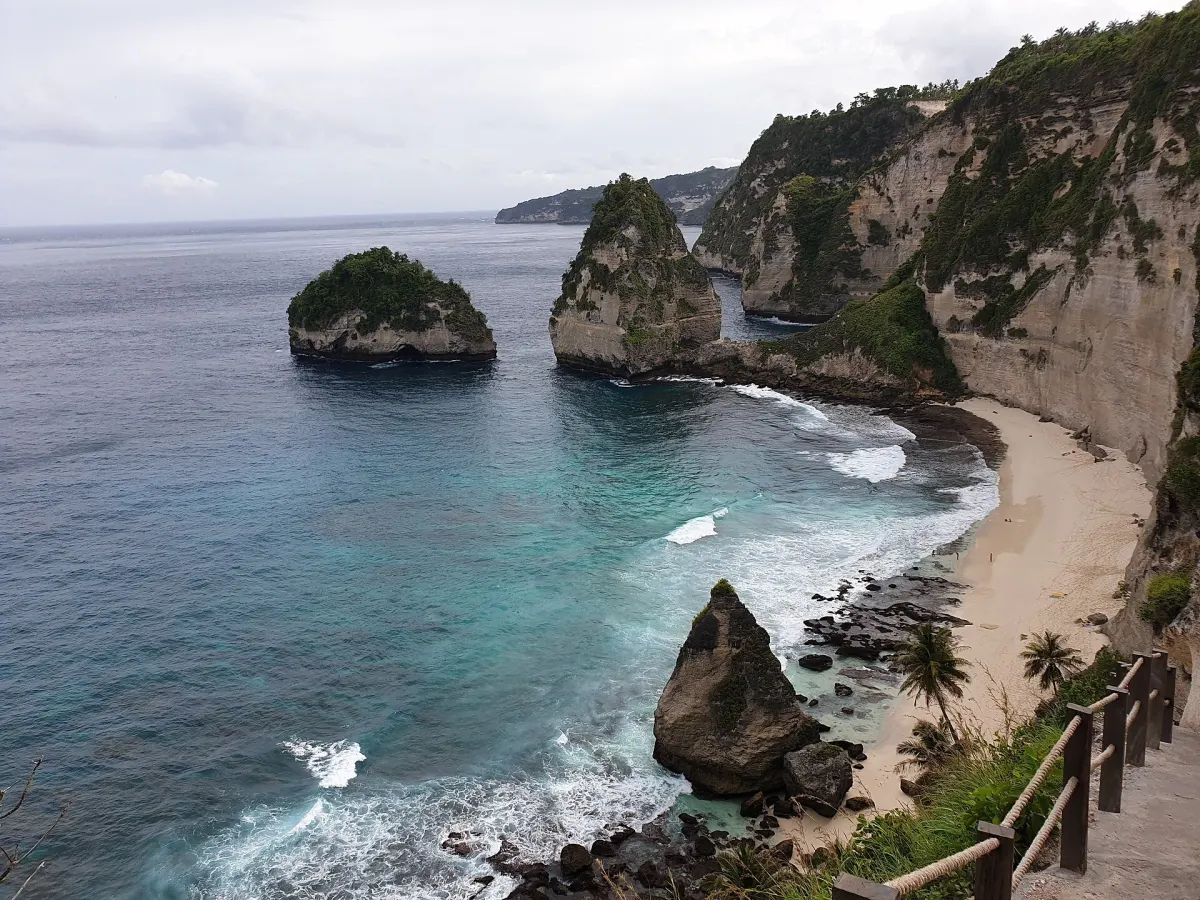
Nusa Penida — Nusa Penida’s new One Gate One Destination (OGOD) tourism fee system raised about Rp2.7 billion in attraction levies during its first nine days of operation from 1–9 September 2026, while also triggering queues, traffic disruption and intensified scrutiny of how fees are collected and shared.
Patrolipost reported that attraction-fee receipts (retribusi daya tarik wisata/DTW) reached around Rp2.7 billion in that period, with daily takings ranging from Rp285 million to Rp330 million and averaging roughly Rp300 million, according to Klungkung Tourism Agency head I Gusti Agung Gde Putra Mahajaya.
The OGOD system was introduced under Klungkung Regional Regulation No. 4 of 2026 and officially came into force on 1 September on Nusa Penida. Under the arrangement, foreign visitors pay a regional entry levy on arrival at the island, then a separate attraction fee at each participating site, while Indonesian visitors are exempt from the island-entry levy and pay only the attraction charge at individual destinations, according to Bali.live and Gobaligo’s guide to the new tax.
According to local media, the Tourism Agency now uses a digital dashboard to monitor visitor numbers by attraction and category, as part of broader efforts to modernise fee collection and management.
Revenue gains and operational bottlenecks
Mahajaya told Patrolipost that before OGOD, daily receipts from attraction fees were about Rp100 million to Rp150 million, indicating that the new system has roughly doubled to tripled daily revenue in its initial phase. The reported Rp2.7 billion in nine days was recorded under normal visitor conditions and does not yet reflect peak holiday periods.
Bali.live reported that the first day of OGOD generated more than 11,000 transactions, accompanied by long queues at ticket counters at popular spots such as Kelingking Beach and Crystal Bay. Narrow access roads became clogged as vehicles dropped tourists close to entrance points, and many visitors opted to buy tickets on arrival instead of in advance, adding to delays.
Connectivity and power reliability also affected operations. Coverage by Gobaligo and Patrolipost noted that Starlink satellite internet has been installed at several attractions to support the cashless, QR-based payment system, while the Tourism Agency prepared generators intended to provide several hours of backup power after an early outage disrupted service.
Authorities have since encouraged guides, drivers and travel agencies to arrange tickets before departure and use QR codes or vehicle barcode stickers to speed scanning at control points. The procedure now requires vehicles to stop in parking areas, with passengers walking to ticket counters to complete fee payments.
Bali.live reported that seven destinations are currently linked to the OGOD attraction-fee scheme: Kelingking Beach, Angel’s Billabong, Broken Beach, Crystal Bay, Bukit Teletubbies, Molenteng, Devil’s Tear on Nusa Lembongan, and Teletubbies Hill.
Key reported figures:
- Rp2.7 billion: attraction-fee receipts from 1–9 September 2026.
- Rp285 million–Rp330 million: daily receipts over that period, averaging about Rp300 million.
- More than 11,000: transactions recorded on the first day of OGOD implementation.
- About 7,472–7,473: visitors displayed on the Tourism Agency dashboard around 12:32 WITA on 10 September, according to Patrolipost.
Diamond Beach: open to visitors, fees restricted
The new attraction-fee system has also highlighted regulatory gaps at Diamond Beach in Pejukutan village, Nusa Penida. On 3 September, Patrolipost reported that certain tourism facilities and rides at Diamond Beach were temporarily closed because their permits, including Persetujuan Bangunan Gedung (PBG) building approvals, were incomplete.
Subsequent coverage by Detik Bali and other outlets clarified that while tourist businesses and unlicensed attractions at Diamond Beach have been halted pending permit completion, the beach itself remains open to visitors. Klungkung officials stated that operators at Diamond Beach are prohibited from collecting independent entrance or tourism fees until licensing and site-management issues are resolved.
Detik reported that the Tourism Agency plans to integrate Diamond Beach into the official attraction-fee regime once permits are in order, with a proposed DTW levy of Rp25,000 per person replacing an independently collected entrance fee of around Rp60,000 per person. The future arrangement is expected to involve cooperation between the regency government, customary village authorities and landowners, though detailed revenue-sharing mechanisms have not yet been publicly finalised.
Gobaligo’s guide and Bali.live’s earlier reporting indicate that under Regulation No. 4 of 2026, foreign tourists pay Rp25,000 per adult as an island-entry levy and then Rp25,000 per adult and Rp15,000 per child at each attraction, while Indonesian visitors pay only the per-site fee. Local media emphasise that assessments of whether individual charges are lawful must be based on the regulation and valid permits, not merely the presence of a ticket booth.
Timeline of the new system and Diamond Beach measures
- 12 August 2026: Bali.live reported that OGOD would expand entry fees to key beaches and viewpoints, introducing a Rp25,000 attraction levy per adult and Rp15,000 per child at selected sites.
- 1 September 2026: OGOD formally began on Nusa Penida, bringing a new cashless, digital fee collection system and initial congestion at major attractions.
- 1–9 September 2026: DTW attraction-fee receipts reached approximately Rp2.7 billion, according to the Klungkung Tourism Agency.
- Early September 2026: Klungkung authorities temporarily closed or restricted operations at unlicensed tourism facilities at Diamond Beach and barred independent fee collection pending permit reviews.
- 10 September 2026: Mahajaya reiterated that Diamond Beach remains open to tourists but that operators may not charge attraction fees until all building and operating permits are completed.
Sources
Next story

New qualifying and pit-lane rules applied at Mandalika Racing Series round
Organisers of the Pertamina Mandalika Racing Series 2026 are applying revised qualifying, pit-lane and warm-up procedures at the fourth round at Manda…
Related