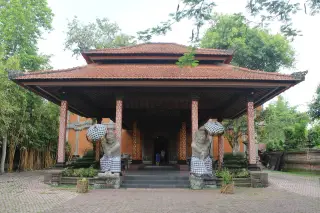

SAKA Museum Opens Kamasan Exhibition in Jimbaran
SAKA Museum at AYANA Bali has launched its first temporary exhibition, KAMASAN: The Noble Tradition of Balinese Painting, bringing together more than 30 works from the late 19th century to today.
By Mukmin John
Editor: Mursyid Sonsang
· 4 min read
Jimbaran — SAKA Museum at AYANA Bali has opened its first temporary exhibition, KAMASAN: The Noble Tradition of Balinese Painting, presenting more than 30 works tracing the Kamasan painting tradition from the late 19th century to the present. According to the museum and event listings, the exhibition runs from 28 August 2026 until 30 May 2027 and is open daily from 10:00 to 18:00 WITA.
The exhibition inaugurates the museum’s new gallery space dedicated to Bali’s living culture, with a fresh theme planned each year, according to Bali Buddies. The show brings together ritual cloths, palm-leaf works, a traditional Palelintangan astrological calendar and paintings entrusted to SAKA Museum by families and descendants of Kamasan artists, as reported by Media Indonesia and other Indonesian lifestyle outlets.
Curated by Farah Wardani and Made Chandra, with exhibition design by studiodikubu, the display is organised into a series of time-based chapters. Event coverage by DestinAsian notes that visitors follow a narrative from the tradition’s early roots and master painters through women artists and contemporary practitioners, while also exploring the visual language that links these works.
From court tradition to contemporary practice
The Kamasan style takes its name from a village in Klungkung Regency, where the visual language developed under the Gelgel kingdom in the 16th century and continued under the patronage of the Klungkung courts, according to the museum’s official description. SAKA Museum and Indonesian media reports emphasise that the tradition is closely tied to Balinese Hindu narratives, including episodes from the Ramayana and Mahabharata, as well as stories from other literary sources such as Sutasoma, Panji and Tantri.
The museum explains the Kamasan system through linework, gestures and colour conventions. Figures of humans, animals and deities are typically rendered in flat compositions with stylised limbs and eyes, and show a strong relationship to wayang kulit shadow-puppet theatre, reflecting the tradition’s origins in courtly storytelling and religious teaching.
DestinAsian and Harper’s Bazaar Indonesia report that the exhibition gathers more than 30 works, including historical pieces from the late 19th century alongside recent works produced over the past five years. These newer pieces are described as observing inherited Kamasan rules, known as pakem, while addressing contemporary subjects such as identity, ecology, technology and memories of the COVID-19 pandemic.
SAKA Museum’s own materials add that Kamasan painting has been recognised by the Indonesian government as an element of Intangible Cultural Heritage since 2015, underscoring the tradition’s continuing importance in Balinese cultural life.
Exhibition data
- Venue: SAKA Museum, AYANA Bali, Jimbaran
- Dates: 28 August 2026–30 May 2027
- Hours: Daily, 10:00–18:00 WITA
- Scale: More than 30 works, with the museum citing 34 works by 17 artists and contributors
- Curators: Farah Wardani and Made Chandra
Women and the living legacy
Coverage of the exhibition highlights a section devoted to women’s roles in sustaining and reinterpreting Kamasan painting. Indonesian lifestyle media describe a focus on Mangku Muriati, a Kamasan painter and temple priest whose work has appeared in international exhibitions and is held in museum collections abroad.
The public programme accompanying KAMASAN: The Noble Tradition of Balinese Painting is reported to include artist and curator talks as well as workshops designed to engage visitors with the living tradition, according to travel and tourism media. SAKA Museum states that the show positions women’s participation and contemporary reinterpretations as integral to Kamasan’s ongoing evolution, presenting the style as a living practice rather than a closed historical form.
Sources
- Travel Daily Media – Saka Museum unveils Kamasan exhibition in Bali
- DestinAsian Indonesia – Event September 2026: 16 Acara Seru
- Harper’s Bazaar Indonesia – Menelusuri Warisan Kamasan The Noble Tradition of Balinese Painting di Saka Museum
- Bali Buddies – Saka Museum Celebrates Classical Art with Its Temporary Exhibition Debut
- AYANA Bali – SAKA Museum experience page
Next story
ADIR 2026–2027 Links Bali and Burgundy in Forest-Themed Design Residency
CushCush Gallery’s Artist Designer In Residence 2026–2027 pairs Bali-based designer Cokorda G. B.
Related