
IMPULSE exhibition tests how Balinese artists rework tradition
A three-artist exhibition at Kalpataru Art Space in Sanur Art Hub used 26 abstract works in paper, thread and acrylic to explore how contemporary Balinese practice can engage ritual memory and everyday life without abandoning cultural…
By Mukmin John
Editor: Mursyid Sonsang
· Event date: · 4 min read
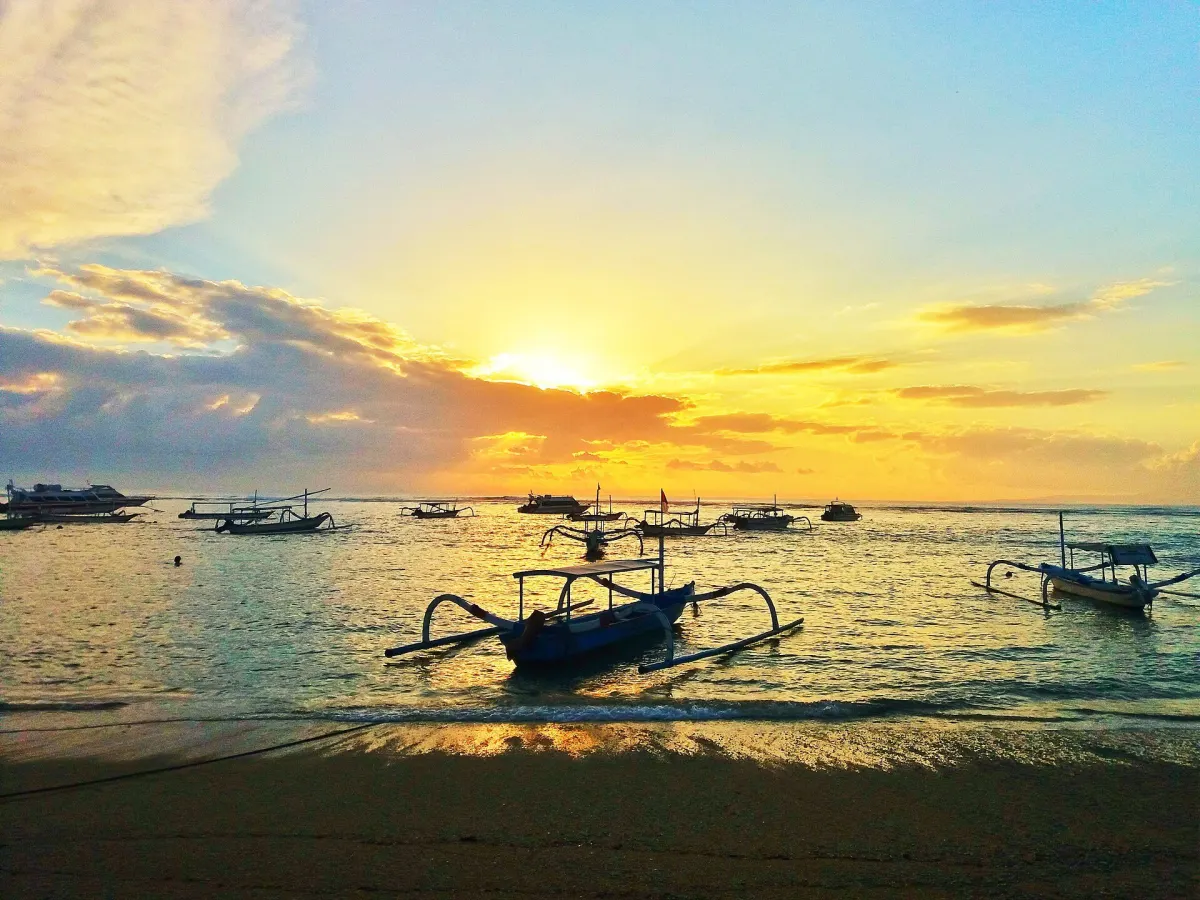
Sanur — A collaborative exhibition titled IMPULSE brought together three senior painters from Sukawati, Gianyar, at Kalpataru Art Space in Sanur Art Hub from 19 August to 15 September 2026, using 26 works to explore how contemporary practice engages with Balinese cultural inheritance.
The exhibition featured I Made Mahendra Mangku, I Wayan Arnata and Made Galung Wiratmaja, all originally from Sukawati. According to an exhibition text and local coverage, the show’s central proposition was that artists can pursue personal visual languages without severing ties to inherited memory, ritual and environment.
The three artists worked with distinct materials. Mahendra Mangku presented works on paper, working through colour and abstraction drawn from natural forms. Arnata used thread as his main medium, extending techniques associated with ceremonial decoration into contemporary compositions that address memory and ritual. Galung developed acrylic paintings on canvas that combine figures, silhouettes and abstracted spaces to address social relationships and pressures in contemporary life.
Three materials, three approaches
Art Nusantara’s review characterised Mangku’s contribution as a quiet inquiry into change, in which forms lose definition and pigment appears to move across the surface, treating nature less as a stable image than as an ongoing process. The review connects this approach to water both as medium and as a conceptual reference for movement and transformation.
Arnata’s thread-based works draw on ngodi, a traditional method of decorating ceremonial materials associated with ngaben, the Balinese cremation ceremony, while translating this knowledge into a contemporary visual language rather than reproducing it literally. A separate feature on the exhibition notes that Arnata presented new works titled “Resonansi” and “Lintasan Lelaku”, described as responses to the Sanur Art Hub environment and to the artist’s personal journey.
Galung’s acrylic paintings formed the largest single body of work in the show and focus more directly on people and the pressures of social life. Local coverage describes his canvases as spaces where figures, shadows and fragments of the urban environment intersect, using abstraction to suggest psychological density rather than depicting everyday scenes straightforwardly.
Across these differences, both sources emphasise a shared reliance on abstraction as a visual language, used not to distance the works from experience but to revisit environment, tradition and human relationships.
Tradition as an active structure
According to Art Nusantara, IMPULSE treats cultural knowledge as an underlying structure rather than a decorative motif. In Arnata’s case this structure is explicit, in the engagement with ngodi and ritual memory; in Mangku’s and Galung’s work it appears more indirectly in their treatment of nature, lived experience and social space.
The exhibition title is read as pointing to both personal impulse and collective pulse: the individual drive to make art and the longer rhythms of inherited practices. In this interpretation, the three artists are shown negotiating these overlapping forces instead of resolving them into a single, unified image of Balinese tradition.
Local reporting also situates Kalpataru Art Space as an independent, community-oriented venue that combines a gallery, culinary area and informal gathering place, in contrast with hotel-based galleries where art may primarily serve hospitality functions. This setting, close to everyday social activity, is described as reinforcing the exhibition’s interest in ordinary life and accessible engagement with contemporary art.
Balance and limits
The 26 works were divided among the three artists, with Mangku working on paper, Arnata with thread and Galung on canvas. Art Nusantara notes that this numerical and spatial distribution shaped the visitor’s experience: Galung’s larger and more numerous paintings dominated the gallery, while Mangku’s smaller works were more easily overlooked in an open-plan arrangement.
Both the review and local coverage present IMPULSE as a case study rather than a definitive statement on Balinese art’s relationship to tradition. Its strength lies in allowing differences in material, memory and subject matter to remain visible, using contrast rather than a uniform style to argue that cultural inheritance can be actively reworked in contemporary practice.
The show’s limitation, as highlighted in critical commentary, is concrete rather than theoretical: the imbalance between the bodies of work produces an uneven visual field, which may reduce the visibility of the most delicate pieces. Nonetheless, the exhibition is presented by its commentators as evidence that contemporary artists in Bali can maintain contact with ritual and local knowledge while working fully within current visual languages.
Sources
Next story
Heinz von Holzen’s ‘Megibung’ Book Collects 110 Balinese Recipes
Megibung: A Culinary Journey Through Balinese Families & Ceremonies collects 110 Balinese recipes, more than 250 photographs and stories about communa…
Related