

NTT posts 0.40% August deflation despite Flores earthquake disruption
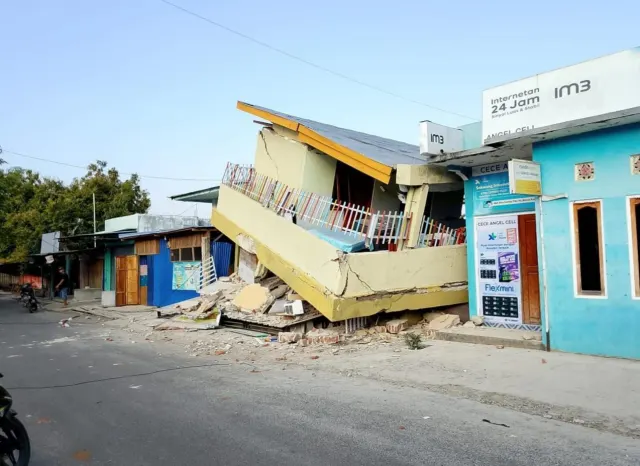
Statistics Indonesia (BPS) reported Nusa Tenggara Timur posted 0.40% monthly deflation in August 2026, even as a magnitude-7.7 offshore quake near Nagekeo disrupted roads and supply lines in Flores.
Editor: Mursyid Sonsang
· Event date: · 4 min read

Labuan Bajo — — Nusa Tenggara Timur recorded monthly deflation of 0.40% in August 2026, even as a powerful earthquake struck off the coast of Nagekeo in Flores on 15 August, according to Statistics Indonesia (BPS) and official disaster reports.
BPS Deputy for Distribution and Services Statistics Ateng Hartono told reporters that the province’s deflation reflects price movements across all monitored cities and regencies, not only the areas affected by the quake.
Hartono said the earthquake damaged infrastructure and disturbed distribution chains in parts of Flores, pushing up prices for several commodities in the impacted zones, but noted that stable or declining prices in other parts of NTT outweighed those increases in the aggregated index.
Provincial deflation amid local disruption
In a press conference in Jakarta on 1 September 2026, BPS reported that NTT posted deflation of 0.40% month-on-month in August, making it one of the provinces with falling consumer prices that month.
Hartono explained that inflation figures for NTT are calculated from multiple sampling points across the province, so the result captures the net effect of price changes in both affected and unaffected districts.
He said the earthquake’s impact on distribution in Flores was visible in the data for some commodities, but stressed that price stability and declines elsewhere offset those increases when the figures were combined at provincial level.
Local media in Kupang reported that BPS linked the August deflation to lower food prices, with several staple items becoming cheaper compared with July, contributing to the overall decline in the consumer price index.
The provincial average therefore does not mean that all households experienced lower prices.
Communities closest to damaged roads or ports may still have faced temporary shortages or higher transport costs, while markets in other regencies continued to receive supplies normally or benefited from seasonal harvests.
Earthquake and tsunami warning
The earthquake struck the Flores Sea off Nagekeo in the early hours of Saturday, 15 August 2026.
The Meteorology, Climatology and Geophysics Agency (BMKG) initially recorded the tremor at magnitude 7.0 before updating it to magnitude 7.7 after further analysis, with a shallow depth of about 15 kilometres.
BMKG located the epicentre in the sea tens of kilometres northeast of Mbay in Nagekeo, and issued a tsunami early warning for coastal areas of NTT shortly after the quake.
The National Disaster Management Agency (BNPB) later confirmed that the epicentre lay around 38 kilometres northeast of Mbay at a depth of 15 kilometres and reported casualties and damage in several districts.
Residents in coastal communities evacuated to higher ground during the warning, and authorities monitored potential tsunami waves before the alert was lifted.
Logistics kept moving with delays
Transport Minister Dudy Purwagandhi said on 21 August 2026 that logistics distribution in NTT remained operational after the earthquake, despite damage to some transport infrastructure.
He acknowledged that certain road links were disrupted by landslides, causing delays to overland deliveries, but insisted that overall flows of goods continued.
The minister said the government prioritised sea transport to move relief supplies and essential goods to locations that were difficult to access by road, noting that NTT’s archipelagic geography makes maritime routes critical for connectivity.
He described measures including adjustments to shipping operations, inspections of port facilities and temporary waivers of freight charges for humanitarian cargo on state-supported vessels.
Taken together, the BPS and Transport Ministry accounts depict a mixed supply picture: damage and disruption in some corridors, but functioning alternative routes and networks that helped maintain province-wide distribution.
Aggregate data and local recovery
The August deflation figure is an aggregate statistical outcome across NTT rather than a direct measure of post-earthquake recovery in Flores.
While lower food prices and stable conditions in many districts pulled the overall index down, households in the most affected areas may simultaneously have faced higher costs or reduced access to certain goods.
More granular data by district and commodity will be needed to show how price changes were distributed between quake-affected communities and the rest of the province, and whether seasonal harvests or demand shifts played a larger role than disaster-related disruptions.
Sources
- Bisnis.com – NTT Alami Deflasi 0,4% Meski Flores Diterpa Gempa, Ini Penjelasan BPS
- BMKG – Gempa Bumi M7,0 – 38 km TimurLaut Mbay-Nagekeo-NTT (updated parameters)
- BNPB – [Update]: Gempa M 7,7 NTT, Kepala BNPB dan Menko PMK Segera Turun ke Lapangan
- Media Indonesia – Gempa M7,7 Guncang NTT, Warga Mbay Evakuasi ke Dataran Tinggi
- RRI Kupang – Harga Pangan Turun, BPS: NTT Alami Deflasi 0,40 Persen di Agustus 2026
- Bloomberg Technoz – Inflasi Kalimantan Tembus 4% per Agustus 2026, di Tengah Karhutla
Next story
Bali Deploys Emergency Medical Teams to Quake-Hit NTT
Bali’s provincial health office has deployed emergency medical teams and medical logistics to Sikka and Nagekeo in East Nusa Tenggara following the 15…
Related