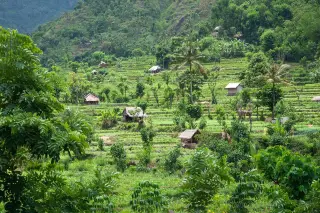

BMKG Forecasts 1–50 mm of Rain and Low Paddy Groundwater in Bali in September
Indonesia’s meteorological agency BMKG forecasts mostly 1–50 mm of rain in Bali in September 2026 and classifies groundwater availability for paddy as low across the island, as a strong El Niño and a developing positive Indian Ocean Dipole…
Editor: Mursyid Sonsang
· 4 min read
Denpasar — Bali is forecast to see generally 1–50 millimeters of rain in September 2026, with groundwater availability for paddy classified as low across the province, according to the August climate summary from BMKG’s Bali climatology station and national atmospheric analyses.[6][12]
BMKG also categorizes September rainfall in Bali as predominantly below normal, extending a dry-season pattern that has already produced long rainless spells in parts of the island.[6][12]
The outlook has raised concerns over irrigation and river levels, with local media reporting sharp drops in Bali’s river stages as the dry season intensifies.[13]
September rainfall and groundwater outlook
In its August 20, 2026 climate information summary, BMKG’s Bali climatology station projects September rainfall in Bali to be mostly between 1 and 50 mm for the month.[6]
The same document states that groundwater availability for paddy ("Ketersediaan Air Tanah" or KAT) in September 2026 is expected to be in the "Kurang" (low) category across Bali.[6]
National atmospheric analyses from BMKG indicate that for September 2026, monthly rainfall of less than 50 mm is likely across Java and Bali, placing much of the region in a low-rainfall regime during this period.[12]
BMKG’s groundwater availability categories are defined nationally, with "Kurang" indicating less than 40 percent availability relative to needs.[2]
Outlook for October and November
The Bali climatology summary focuses primarily on the September outlook, but national BMKG analyses show a broader dry-season pattern in the early months of the final quarter of 2026.
BMKG’s dasarian (10‑day) forecasts for September–October suggest rainfall in many parts of Indonesia, including Bali, will stay in the low to medium range, generally 0–150 mm per dasarian, with Bali flagged among areas expected to experience low (<50 mm) rainfall in successive 10‑day periods in September.[5][12]
By November, BMKG’s national climate bulletins indicate that rainfall probabilities begin to increase in many regions as the rainy season gradually approaches, although specific monthly totals for Bali are not detailed in the available national documents.[3]
Dryness signals in Bali
The August Bali climate summary also reviews conditions in July 2026, reporting monthly rainfall totals ranging from 0 to 425.5 mm, with the highest recorded in southern Karangasem. Overall, BMKG assesses July rainfall in Bali as below normal.[6]
BMKG notes that dry conditions strengthened in northern and western Bali during July. Some rain-gauge posts recorded between 21 and 30 consecutive days without rain, while others registered 31–60 days. One post at Sumber Klampok in Gerokgak exceeded 60 consecutive dry days during the observation period.[6]
Local coverage in early September highlighted the hydrological impact of the prolonged dryness, reporting that river levels across Bali had fallen sharply, with one river in Tabanan Regency, Yeh Mawa, described as having dropped by around 98 percent compared with normal levels.[13]
El Niño, Indian Ocean Dipole and climate context
BMKG’s national atmospheric analyses show that an intense El Niño event was underway in mid‑2026, with sea surface temperature anomalies in the key Nino 3.4 region indicating a strong El Niño during July and subsequent months.[3][7]
In separate national bulletins and press statements, BMKG projects that El Niño 2026 will persist at least into early 2027, while the Indian Ocean Dipole (IOD) is expected to shift towards a positive phase from around September to December 2026.[8][10][15]
BMKG links these coupled ocean–atmosphere anomalies to an increased risk of below-normal rainfall and drought across parts of Indonesia, including Bali, during the 2026 dry season.[3][10][15]
While these climate drivers help explain the dry outlook and low groundwater availability for paddy, BMKG’s climate summaries and national bulletins do not provide detailed, real-time data on reservoir storage, canal flows or irrigation responses in specific districts. Water managers and farmers must therefore combine BMKG’s climate guidance with on-the-ground measurements and local authority reports to plan cropping and irrigation through the remainder of the dry season.
Sources
Next story
Tourism’s 65% share of Bali’s water use meets tougher 2026 rules
Tourism is estimated to consume more than 65% of Bali’s freshwater, with demand concentrated in the island’s south.
Related