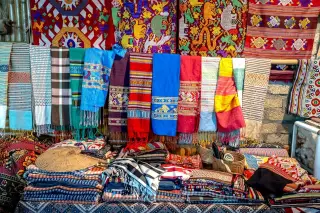

Buleleng Festival 2026 projects Rp3.6 billion economic circulation
Buleleng Festival 2026 in Singaraja recorded more than Rp3 billion in transactions and was projected by local authorities to reach around Rp3.6 billion in total economic circulation, with 105 UMKM taking part across three festival zones.
By Pandi Muktar
Editor: Mursyid Sonsang
· Event date: · 4 min read
Singaraja, Bali — Buleleng Festival 2026 recorded more than Rp3 billion in economic transactions over its six-day run, with the Buleleng administration projecting total circulation to reach around Rp3.6 billion once all activities concluded, according to official statements and local media reports.
The festival, branded Bulfest 2026, took place in Singaraja and was centred on the Praja Mandala Singa Ambara Raja area. Local coverage and a release from the Buleleng administration describe the event as a blend of cultural performances, culinary offerings and creative products aimed at both residents and visitors.
According to the Buleleng government’s communications office, 105 curated micro, small and medium enterprises (UMKM) took part in the festival, covering handicrafts, local culinary products, processed foods, fashion and other creative economy goods. The official release emphasised that involving UMKM and artists was a central pillar of the programme.
More than Rp3 billion in recorded transactions
Local outlet Balijani reported that the festival booked economic circulation of more than Rp3.091 billion during five days of activity, with the figure projected to reach Rp3.6 billion by the end of the full programme. A separate report from public broadcaster RRI stated that the festival’s economic circulation reached Rp3.6 billion by the time the event closed, citing the regent.
Coverage in cultural and economic outlet Tatkala also reported that 105 local UMKM benefited from festival-related transactions totalling Rp3.091 billion, quoting Buleleng Regent I Nyoman Sutjidra’s remarks at the closing ceremony. Taken together, these accounts indicate that more than Rp3 billion in transactions were recorded during the festival, with local authorities presenting Rp3.6 billion as the overall economic circulation figure.
None of the publicly available reports provide a detailed methodology for the calculation, and they do not break the total down by business sector or spending category. The term “economic circulation” is used in coverage and official communication, but is not formally defined in the materials reviewed.
UMKM distribution across three festival zones
Balijani and Tatkala report that the 105 participating UMKM were distributed across three areas designated as Zones A, B and C. Zone A hosted 48 tenants, Zone B 38 tenants and Zone C 19 tenants, accounting for all participating businesses.
An earlier briefing from the Buleleng administration describes the three zones in broader terms as a heritage area themed “Buleleng Tempo Dulu”, a creative space for young people and a sustainable culture zone. In that document, Bulfest 2026 is presented as a way to revive the old town’s appeal through nostalgic culinary offerings while supporting the creative economy.
Available reports do not specify average sales per stall or identify which product categories generated the highest turnover. They also do not provide separate visitor numbers for local residents versus domestic or foreign tourists, although coverage notes that the festival attracted both community members and visitors from outside the region.
Regent highlights creative economy and culture
In statements reported by Tatkala and referenced by the Buleleng administration, Regent I Nyoman Sutjidra thanked local UMKM for their participation and linked the festival’s economic performance to efforts to strengthen the creative economy. He said the administration would continue to support culture and creative sectors through programmes benefiting artists and small businesses.
Official and media accounts frame Bulfest 2026 as both an economic and cultural initiative, aiming to preserve Buleleng’s heritage while creating a contemporary platform for local entrepreneurs and creative workers. They do not, however, set out targets or an evaluation framework for measuring the festival’s longer-term economic impact beyond the reported circulation figure.
Sources
- Balijani.id – "Bulfest 2026 Resmi Ditutup, UMKM Buleleng Catatkan Transaksi Lebih dari Rp3 Miliar"
- RRI Singaraja – tag page and article snippet "Resmi Ditutup, Buleleng Festival 2026 Catat Perputaran Ekonomi Rp3,6 Miliar"
- Tatkala.co – "105 UMKM Lokal Raup Untung, Perputaran Ekonomi Buleleng Festival 2026 Tembus Rp3,091 Miliar"
- Protokol dan Komunikasi Pimpinan, Pemkab Buleleng – Bulfest 2026 release
- Denpasar24.com – "Bulfest 2026 Diakui Pelaku Usaha Buleleng Jadi Panggung UMKM Lokal"
Read next
More on this story
Business & Investment
Buleleng Housing Program Advances Toward December Completion
Buleleng’s 1,200-home rehabilitation program is roughly 50 percent complete on average and targeted for completion by December 2026. Officials say abo…
Most read in Business & Investment

Today’s top story
Related